


Go to bat for us.
Join our roster.
Own a piece of history.
Join our roster.
Own a piece of history.
Go to bat for us.
Join our roster.
Own a piece of history.
Although this exhibit primarily focuses on baseball in Toronto, we first have to step back to the end of the 1800s to look at another group of baseball players and figures who, in many ways led the way for the individuals we will be discussing in this exhibit. Let’s begin by looking at the rebels of the American Association of 1880.
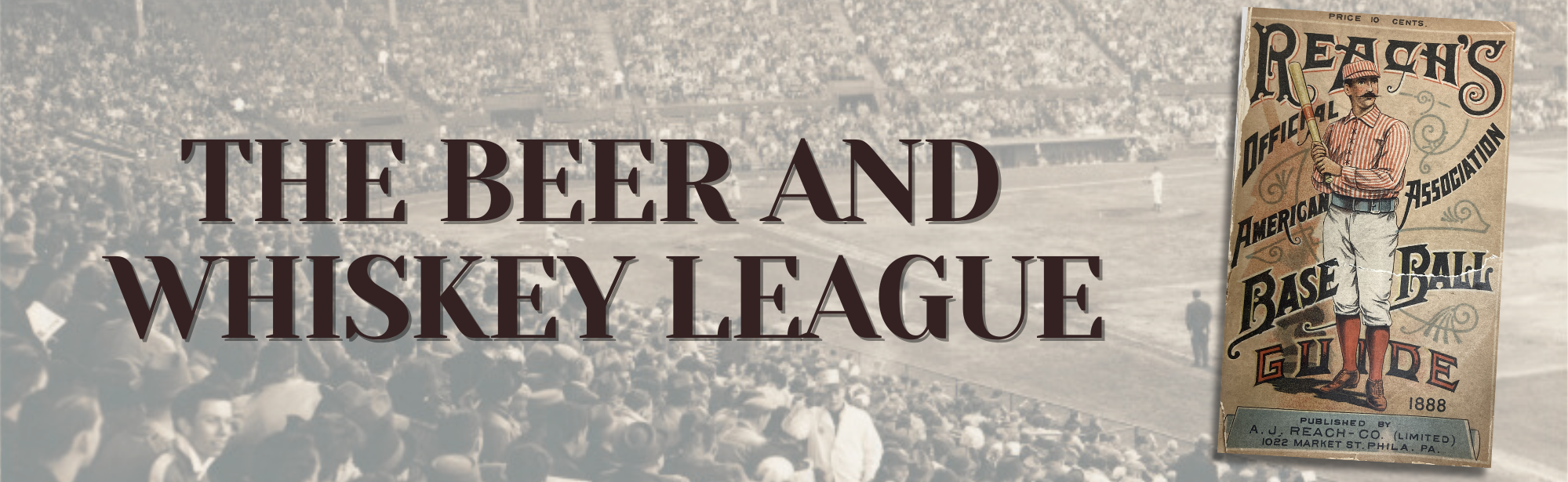
The National Association of Professional Base Ball Players was founded as baseball’s first professional league in 1871. The league struggled through five seasons characterized by bad behaviour on the part of players and management, and a lack of disciplinary power to stop such behaviour. In 1876, several teams, led by William Hulbert of the Chicago White Stockings, abandoned the floundering National Association, founding their own National League. The National League was tightly managed by Hulbert who enforced strict rules for teams, and forced ballparks to straighten up. This including eliminating games on Sundays in communities where this was not already the norm, and banning the sale of alcohol to fans. The straight-laced league prevailed for four seasons, but in 1880, another reformation occurred. The Cincinnati Red Stockings began selling beer, and scheduling Sunday games, two offences which saw them ousted from the league. In response, the Red Stockings initiated a brand-new league: the American Association. The American Association was all that the National League was not: cheaper (25 cents for a ticket instead of 50 cents), more accessible (Sunday games were included on the schedule), and the sale of alcohol was a foundational element of the league as a way of financing the teams. The National League owners, looking down their noses at this rogue organization gave it the nickname, “The Beer and Whiskey League”. Despite the initial dismissal from the National League owners, the new American Association was a hit. Not only were games more affordable and available, but they were more fun! In its first year of existence, the American Association generated four times the profits of the National League. It was the first hint at how essential both beer and Sundays were and would remain to baseball. In 1891, the Beer and Whiskey League folded, and in the season following, the National League began allowing beer sales in their ballparks once more. Although short-lived, the American Association proved just how essential beer sales, and Sunday games were to the financial success of a baseball team.
In spite of this early proof of concept, Toronto would struggle with these two questions for another 100 years.